


Can a Landlord or Roommate Give Police Permission to Search My Room?
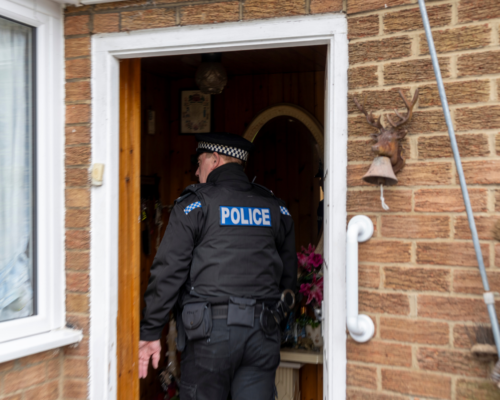
Sharing a living space with others can complicate your legal rights. You may wonder what happens if law enforcement officers arrive at your home while you are away. Your legal protections depend on who gives permission and which areas the officers check. If someone else oversteps the boundaries of your privacy, a Rainbow CA criminal defense lawyer from jD Law Criminal Defense Attorney can be trusted to zealously protect your rights.
Can a roommate or landlord allow police to search your room without realizing the legal rules that apply? Our Rainbow CA criminal defense lawyer knows how to challenge an unconstitutional search and keep illegally obtained evidence out of court.
If you face criminal charges after an unlawful search, contact us at (760) 630-2000 for a free consultation.
What Are the Privacy Rules for Shared Spaces in Rainbow, CA?
Every citizen has a right to live free from unreasonable government intrusions. To decide if a police search was legal, the judge will determine whether you had a reasonable expectation of privacy in your rented room. California courts protect this fundamental right, meaning officers cannot simply barge into your private sanctuary to look for evidence. However, your privacy protection changes significantly when you share a living space with other people.
Shared living arrangements create exceptions to the standard privacy rules. If residents share a kitchen or living room, anyone with common authority over those spaces can let the police inside. A housemate who uses the shared living room daily has the legal power to allow officers to walk through the front door. In that case, police can legally look in any areas that all residents use equally.
What Is the Concept of Common Authority?
To understand how consent works, you must understand the legal concept of common authority. Courts define this concept based on mutual use of the property by persons generally having joint access or control for most purposes. If you split the rent with a housemate, and you both use the living room, each of you holds common authority over that space. Law enforcement can rely on the consent of anyone who shares this level of control.
Common authority does not necessarily extend to every corner of the house. If you keep a lock on your bedroom door and do not allow your housemate inside, your housemate does not have common authority over that room. Police must determine who controls a space before searching it. An officer who ignores a locked door or a clear boundary is violating your constitutional rights.
What Are the Limits of Housemate Consent?
If a housemate lets the police into common areas, that permission stops at your bedroom door. A private bedroom remains strictly off limits without a warrant. A housemate cannot grant access to another resident’s private room.
In the Georgia v. Randolph Supreme Court opinion, the justices established an important rule regarding shared spaces. If two co-occupants are present and one objects, police cannot search the shared area based on the other person’s consent. If you stand there and refuse entry, you hold the power to say no to a search of a shared space. Officers cannot bypass a clear objection by asking a housemate instead.
What About Property Owners in Rainbow?
Renters may worry that property owners will allow law enforcement into their rental homes, especially when the owner holds a master key. Owning the building does not give the landlord the authority to invite police into your home. A lease agreement gives the tenant exclusive possession of the property.
A landlord cannot legally authorize a police search of your rented apartment or private bedroom. As the person paying the rent, you hold the primary right to privacy under the Fourth Amendment of the United States Constitution. The law treats a rented room as an exclusive domain during the term of the lease. If a landlord unlocks a door for the police without a warrant, a judge will likely throw out any evidence the officers find.
What Are Some San Diego County Real World Scenarios?
In a common situation, officers find evidence after a housemate lets the police in without the main tenant’s knowledge. If the police found the items on the shared kitchen table, a prosecutor could potentially use the evidence against you. If the officers went into a closed bedroom to find the items, a judge will almost certainly declare the search invalid.
These situations can lead to an illegal search and seizure case. San Diego prosecutors cannot justify such violations in court. A police officer cannot wander into private rooms simply because a housemate opened the front door.
Another frequent scenario is when a guest or temporary visitor tries to let the police inside. Someone who crashes on the couch for the weekend does not have the legal authority to consent to a search of the home. Law enforcement officers must reasonably believe the person granting consent lives there and has authority over the space. If they rely on a guest’s permission to enter, our Rainbow CA criminal defense lawyer can challenge the resulting search in court.
How Can You Defend Your Constitutional Rights?
When police break the rules, you have powerful legal tools to fight back. We can challenge the search by filing a motion to suppress evidence. This legal pleading asks the judge to exclude any evidence the police gathered illegally. The prosecution bears the burden of proving the officers followed the law.
If the judge agrees the search violated your rights, the prosecutor cannot use that evidence at trial. This often leads to reduced charges or an outright dismissal of the case. You need an advocate who understands how the Fourth Amendment applies to shared housing situations in California.
Reach out to jD Law Criminal Defense Attorney at (760) 630-2000 to build a strong defense against unconstitutional police actions.
Frequently Asked Questions About Police Searches
Can police enter my home without a warrant in an emergency?
Yes, they can enter your home without permission in an emergency or “exigent circumstance.” If police believe someone is in immediate danger or a suspect is actively destroying evidence, the law allows them to enter immediately.
If police officers want to ask questions, do I have to let them inside?
No, you have no legal obligation to open your door or let officers inside for a conversation. You can step outside and close the door behind you to speak to the police if you wish. You may also politely decline to answer questions. Officers cannot force entry without a warrant or a clear emergency.
Don’t Waste Any Time!
Call us today for a FREE Consultation
(760) 630-2000

- Criminal Law Expert - Led by a Board Certified Criminal Law Specialist. Read More About Board Certification
- 100s of Cases Tried - Since 1990, James Dicks has represented hundreds of clients. Read Bio
- Client Approved - Read our online testimonials from satisfied jD LAW Criminal Defense Attorney Clients. Yelp Reviews

- August 20, 2026
How Can a Theft Charge Affect My Immigration … - August 10, 2026
Can You Be Charged for Stealing Items From a Car … - August 5, 2026
Can Theft Charges Be Dropped or Reduced in …